E-commerce Website
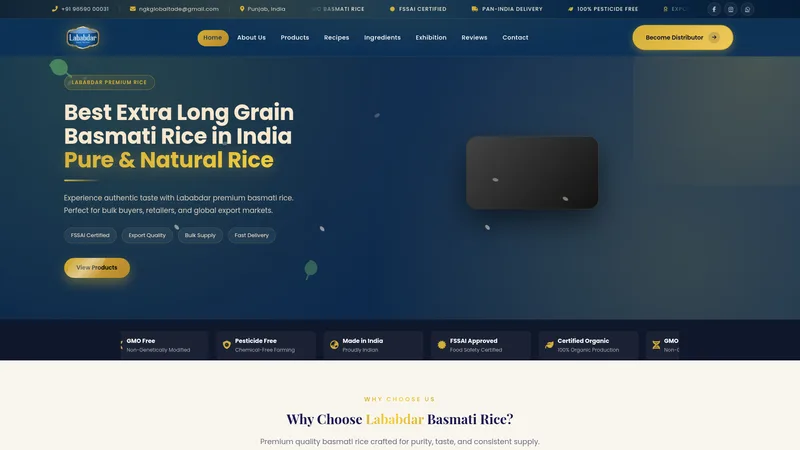
Lababdar Foods — Basmati Rice Brand
Published ecommerce project example with a real portfolio screenshot.
View this portfolio example
Financial services, property, professional services and ecommerce each need a distinct decision path. Keep regulated statements and transaction details accurate, and guide each visitor to the relevant enquiry or purchase step.
Review real portfolio pages for visual and project context. These examples are selected by project type and are not claims that each client is based in Mumbai.
Published ecommerce project example with a real portfolio screenshot.
View this portfolio example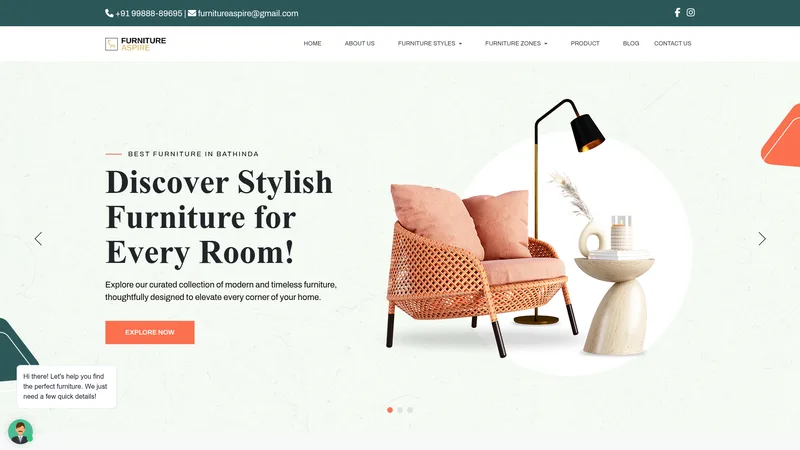
Published furniture website example; its portfolio entry gives the project context.
View this portfolio exampleFinancial pages should use approved, compliant information and avoid return promises. Real-estate pages need accurate listing details; professional firms should define scope, while ecommerce businesses need clear product, payment, shipping and returns information.
BuntyTech works remotely with businesses in Mumbai. Before development begins, we confirm the project scope, communication plan, approval steps and any travel requirements.
For a Mumbai project, a landing page starts from ₹1,500. Other quotes depend on page count, admin features, payments, bookings and integrations; review the full package prices and inclusions before choosing.
View website pricesFor finance businesses in Mumbai, describe the actual offer, inclusions and contact steps. Use current facts and publish examples only with permission.
For real estate in Mumbai, describe the actual scope and process, then use only authorised and accurate project or property details. Make a viewing or consultation enquiry straightforward and avoid unsupported location or performance claims.
For professional services in Mumbai, describe the actual offer, inclusions and contact steps. Use current facts and publish examples only with permission.
For ecommerce in Mumbai, organise products or services with accurate specifications, variants, availability and a clear enquiry or order path. Keep changing prices and stock current, or explain how customers can confirm them.
Before building, identify whether the site is informational, lead-generating or transactional. Confirm approval requirements for finance or property content, and map who handles payments, customer data, fulfilment and post-sale support.
Finance, real estate, professional services and ecommerce each need a page built around their own decision. Use precise finance descriptions and protect personal information; keep property listings and enquiry steps current; define professional-service scope; and give ecommerce customers clear product, variant, delivery and checkout details. BuntyTech plans these websites remotely for businesses serving Mumbai.
Financial or property statements can influence important decisions, so publish only information that the business is authorised and able to verify. Avoid promising returns, property availability or outcomes that depend on changing conditions. Ecommerce merchants should keep prices, stock, shipping, returns and product images aligned with the actual offer. A professional-services firm should describe what is included and where a separate consultation is needed. Use authentic reviews only with permission and never inflate review counts. If visitors submit financial or identity details, confirm the system is designed for that information before collecting it; a standard contact form is not a substitute for a suitable secure workflow.
For a store, test product selection, cart updates, payment success and failure, order confirmation and the information staff receive. Confirm who manages inventory, refunds and customer questions. For property or professional enquiries, test the exact routing and make sure users know what happens after submission. Check mobile layouts at realistic widths and make contact controls easy to use. Review recurring platform and payment-provider charges separately from development; this page does not invent those figures. Keep canonical URLs, internal links and page content consistent. If the business serves areas beyond Mumbai, state the actual coverage instead of creating thin location pages that repeat the same offer.
Use these checks to decide what to build, what to prepare and how to test the parts customers will rely on.
Visitors may use a website to compare financial services or property listings before sharing personal information. Publish approved descriptions, eligibility, disclosures and current listing details. Avoid return promises or availability claims that cannot be verified. Use illustrative images only when labelled accurately. A standard contact form should not collect bank statements, identity documents or account credentials; define a secure process before requesting sensitive information. This protects visitors and makes the business’s next step clearer.
A store needs more than attractive product cards. Confirm categories, variants, prices, stock updates, payment provider, delivery area, cancellations, returns and who answers customer questions. Show policies before checkout and test order success, payment failure, confirmation and staff notifications. If products are custom-priced or stock changes frequently, a catalogue with a quotation route may be a better first version. Choose features based on the real operating process, not on a competitor’s price or technology list.
A consultant or service provider should explain who the offer is for, what work is included, how a project starts and what details help prepare a quote. Separate industries or offers when buyers need materially different information. Link to genuine portfolio examples and explain what each example demonstrates without implying a local client connection. A concise, well-routed form can save time for both the visitor and the team.
Property listings, product prices, inventory, opening hours and service terms can become outdated. Assign an owner for each content type and define how updates are approved. If real-time information is unavailable, tell visitors how to confirm it. Keep the business name, contact details and service coverage consistent across pages. A maintenance plan should identify who controls the website, who handles backups and what third-party subscriptions may continue after launch.
Check that a visitor can open product photos, understand delivery terms, complete an enquiry or find a professional contact from a mobile device. Review keyboard navigation, tap targets, form validation, confirmation and privacy wording. For ecommerce, test the full purchase path and failure states. For property enquiries, verify that the listing is still available and that the right person receives the lead. These checks improve usability without promising a particular ranking or sales result.
These details help BuntyTech review your requirements and agree scope, price and milestones in writing.
Compare the Pune plan with the requirements outlined for Mumbai; choose pages and functions for the audience each site must serve.
Use the location directory to compare remote service areas before choosing the right enquiry route for a Mumbai project.
For a Mumbai website focused on finance businesses and real estate, tell us the visitor action and features you need. We can review the scope before quoting.
Contact BuntyTechFor a project serving Mumbai, tell us the intended audience, the main action visitors should take and any essential functions.