Livvra
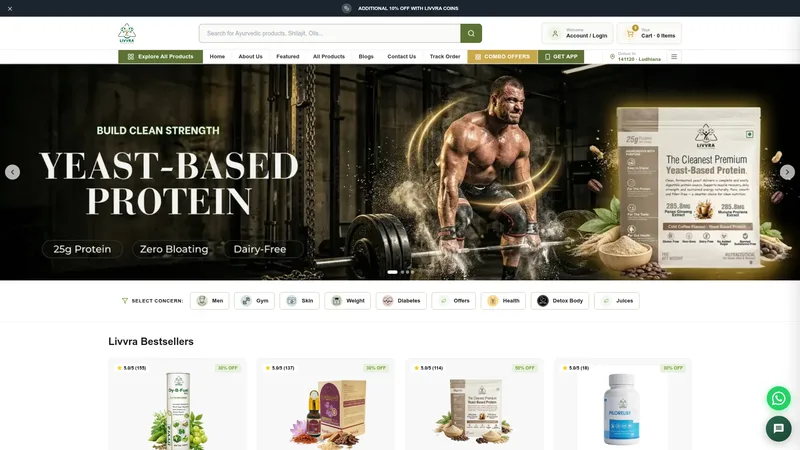
The published project record lists an ecommerce store and mobile app. Review its project page for the recorded scope; no app-store or performance result is claimed here.

BuntyTech helps businesses scope mobile applications around a real customer or staff workflow. Basic app projects start at ₹20,000; the exact platform, features and deliverables are confirmed in a written scope. Compare Android, iOS, cross-platform and web-app approaches before committing to a build.
Mobile app development starts at ₹20,000 only for a limited-scope mobile app project. Treat this as a starting reference, not a fixed price for every feature set.

An app is most useful when people return to a task often: placing repeat orders, tracking a service, booking appointments, learning, or coordinating staff. If visitors mainly need to discover your business and contact you once, a fast mobile website may be simpler to launch and maintain. The decision should follow a user need, not the assumption that every business needs an app.
A WebView wrapper displays a website inside an app shell; it can be suitable for a limited companion experience, but it does not automatically make a web product feel or behave like a native app. A template can reduce design setup but still needs configuration, testing and clear ownership. A custom MVP validates a small set of essential flows. A full production application adds operational controls, security, monitoring and support planning.
Android can be built natively or through a cross-platform framework. iOS has its own platform conventions, device capabilities and App Store review. Flutter and React Native can share much of an application codebase across platforms, but platform-specific permissions, integrations and testing remain. Progressive Web Apps are websites with selected app-like capabilities; they are not identical to native store apps.
The working model is remote project delivery across India. A useful proposal records the intended users, screens, platform, admin needs, integrations, data responsibilities, acceptance checks and handover. BuntyTech is the business providing the service; the founder/developer contact is Bunty Arora. A written scope makes it easier to compare proposals and decide what belongs in a first release versus a later phase.
The ₹20,000 starting reference is for a basic, tightly scoped app project—not every product or feature set. Screen count is only one factor: account roles, custom workflows, backend data, payments, maps, notifications, integrations, quality assurance and store preparation can all change the work. Hosting, SMS, maps, payment processing, store accounts and ongoing maintenance may create separate recurring or third-party costs.
These BuntyTech portfolio pages show real examples of published work. They are included for design and content review, not as claims about traffic, rankings or sales results.
The published project record lists an ecommerce store and mobile app. Review its project page for the recorded scope; no app-store or performance result is claimed here.
Basic mobile app projects start from ₹20,000 as a starting reference for a limited scope, not as a fixed package for every requirement. The written estimate is prepared after reviewing the platform, user journeys, feature list, admin requirements, integrations, testing and handover. A target budget such as ₹50,000 or ₹1 lakh helps prioritise an MVP but does not guarantee every feature will fit. Store accounts, hosting, payment processing, maps, messaging and maintenance may be billed separately by their providers.
For Mobile app development, the enquiry form’s budget choices describe your planned spend—not a fixed BuntyTech app package. Ask for a written quote listing deliverables, exclusions, third-party fees and any maintenance arrangement.
For Mobile app development, these official documents explain current platform requirements. They do not guarantee rankings, inclusion or a particular outcome.
Choose a provider whose proposal explains the user problem, platforms, features, testing, third-party costs and handover. BuntyTech accepts remote enquiries across India; share your brief to assess whether the scope fits the service.
₹20,000 is a starting reference for a basic, limited-scope app project, not a promise that a particular screen list, platform combination or integration is included. Share your must-have features and request a written quote that lists deliverables and any separate provider charges.
Android, iOS and cross-platform approaches can be discussed during scoping. The recommendation depends on your users, required device capabilities, budget and the team that will maintain the product.
For discovery and occasional interactions, start with a website. Build an app when customers rely on repeat tasks, device integrations, push notifications or offline workflows. Choose from the user journey and ongoing operating needs.
A small, clearly defined project may fit a short schedule, but 7–10 days is not a universal promise. Platform setup, content, integrations, testing, client feedback and app-store review can extend the timeline. Confirm dated milestones after the requirements are reviewed.
The brief can be assessed for native Android or iOS, Flutter, React Native, or a progressive web app. The choice depends on device features, audience, budget, store needs and who will maintain the code.
These features can be scoped when the workflow and provider are known. Payment accounts, messaging services, maps and similar third parties have their own approval steps, terms and fees, which should be listed separately in the estimate.
Only if those functions are part of the approved scope. The proposal should name the data, user roles, admin screens, access permissions, hosting and handover responsibilities rather than treating “backend” as one undefined feature.
Store preparation and submission responsibilities must be confirmed in writing. The business should control its developer accounts, and each store independently reviews submissions; approval timing and outcome are not guaranteed.
Ongoing maintenance is not automatically included. Agree separately on updates, monitoring, backups, support hours, response expectations and costs for new features or third-party services.
Share the project type, budget range and preferred timeline. We can review the scope and clarify deliverables before you decide whether to proceed.