
Game Development for Mobile and Web
Game development begins with a playable idea, not a technology list. BuntyTech can review a game concept, its target players, platform and first playable loop before estimating the work. Prototype, art, sound, backend, monetisation and publishing are separate requirements to define; no launch date, store approval or player count is guaranteed.
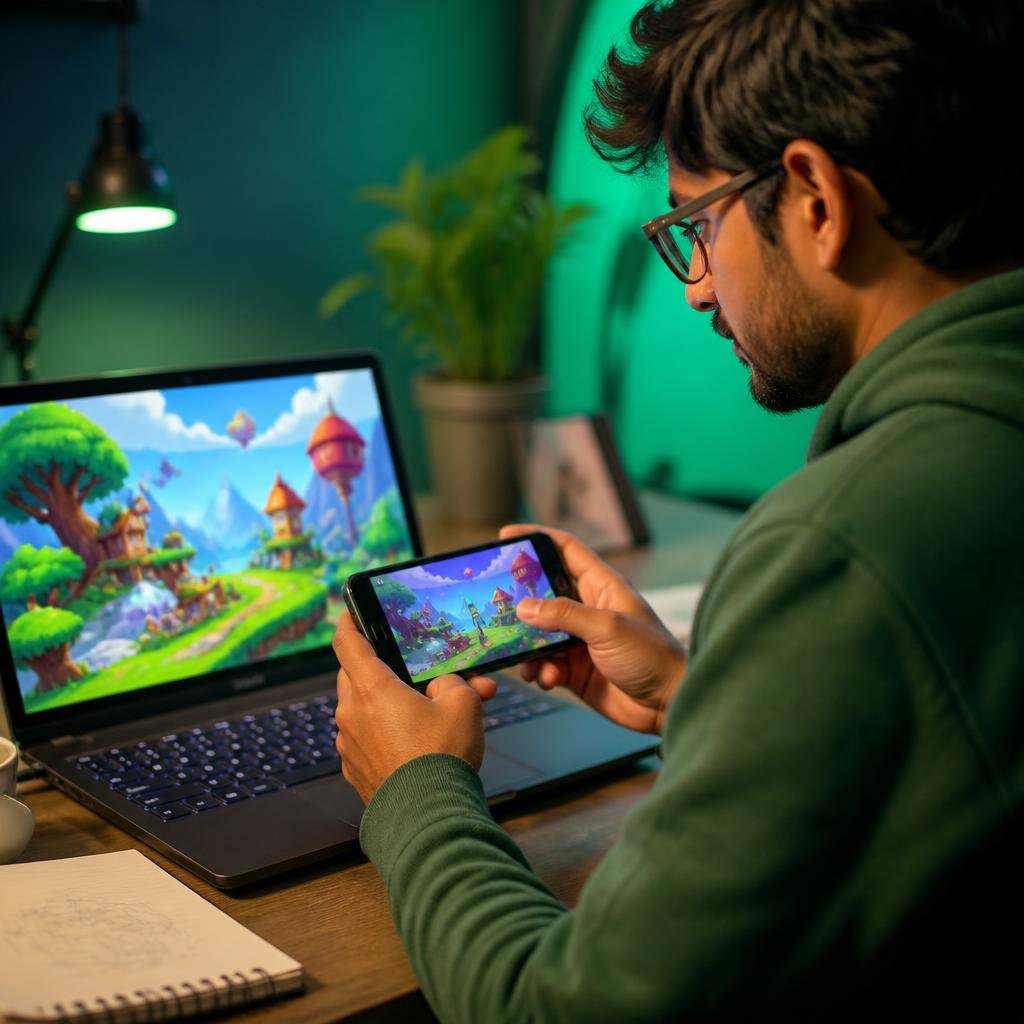
Turn the game idea into a testable first loop
Describe what the player does, what feedback the game gives and why the next round is worth playing. A short prototype can help review controls and pacing before a larger content build. The first brief should identify target age group, session length, device, game mode and any accessibility or language needs.
- Explain the core action in one or two sentences.
- Choose a target platform and likely device range.
- List the minimum playable level, characters or content.
- Separate prototype questions from full-release requirements.
Select platform and technology after requirements
A browser game, Android app and multi-platform title have different input, performance, distribution and maintenance needs. The engine or framework should follow the intended devices, visual complexity, team ownership and available integrations. Choose technology after the game loop and platform are clear, not because a tool is popular.
- Identify where players will discover and install the game.
- Review controls, screen sizes, performance and offline needs.
- Check whether accounts, leaderboards or multiplayer are required.
- Record engine, licence and source-code ownership in the proposal.
Plan art, sound, data and testing as real work
Characters, interface, animation, audio, levels, save states and analytics can each affect time and cost. Decide whether the business supplies licensed assets or needs custom production. Test on representative devices and include failures such as interrupted connections, saved progress, audio controls and accessibility settings in the acceptance checklist.
- Inventory artwork, audio, fonts and usage rights.
- Specify saved data, account roles and online dependencies.
- Test controls, performance and progress recovery.
- Keep third-party services and recurring costs visible.
A public example is not a game case study
BuntyTech’s public portfolio contains published website and software examples, but a game-specific client result should only be shown when a matching, verifiable project is available. The generated image on this page illustrates a development discussion; it is not evidence of a completed game. Ask for a directly relevant example before approving a production scope.
- Review only examples that match the required platform or gameplay.
- Verify who built the work and which parts are comparable.
- Do not infer player numbers or revenue from a visual prototype.
- Use a small prototype milestone to test uncertain mechanics.
Project scope and pricing
No fixed game-development price is confirmed on this page. A quote depends on platform, gameplay, number of levels, art and audio, backend or multiplayer, testing, publishing and support. A prototype and a complete game are different scopes; request a written estimate with milestones, assets, licences and exclusions.
For Game development, ask the written quote to spell out inclusions, exclusions, content ownership, third-party charges, payment milestones and handover. BuntyTech’s standard website prices are in the website cost guide.
How to move from brief to launch
- Share the concept, target players, platform, core loop and budget range.
- Agree whether the first milestone is a prototype, vertical slice or production build.
- Document assets, technical choices, acceptance checks and ownership.
- Test on target devices and plan release, maintenance and future content separately.
Frequently asked questions
What types of games can BuntyTech discuss?
A brief can be reviewed for a browser, mobile or other digital game concept. Feasibility depends on gameplay, platform, art, online features and the people who will maintain it.
Can you build a mobile game for Android and iOS?
The platform plan can be assessed after reviewing controls, performance, device requirements and distribution. Supporting both platforms requires testing and release preparation for each target.
Can you make a game prototype before the full game?
A prototype can be a sensible first milestone when the main uncertainty is gameplay or controls. Define what the prototype must demonstrate and what is deliberately excluded.
How much does custom game development cost in India?
There is no fixed game-development price published here. Cost depends on platform, gameplay, art, levels, backend, testing and ownership requirements; request a written scope after sharing the brief.
How long does a game project take?
The timeline depends on the prototype, content volume, platform, asset production, testing and review turnaround. A release date should be agreed only after the milestones and dependencies are clear.
Which game engine or programming language do you use?
The technology should be selected after the target platform, gameplay, performance and maintenance requirements are understood. The proposal should name the chosen tools and any licence or hosting costs.
Can the game include multiplayer, accounts or leaderboards?
Those features can be evaluated, but they add backend, security, moderation, availability and operating-cost requirements. List the expected player flow and data responsibilities before estimating.
Does BuntyTech have a public game portfolio?
The public portfolio should be treated as evidence only for projects it actually shows. This page does not present a game-specific client case study; ask for a relevant, verifiable example before commissioning production.
Who supplies the characters, art and music?
The quote should state whether BuntyTech or the client supplies each asset and confirm the licences or permissions required for commercial use. Do not publish third-party artwork without appropriate rights.
Does game development include app-store publishing and updates?
Publishing, store assets, account ownership and post-launch updates should be listed separately in the scope. Platform operators decide approval, and future maintenance is not included unless agreed.