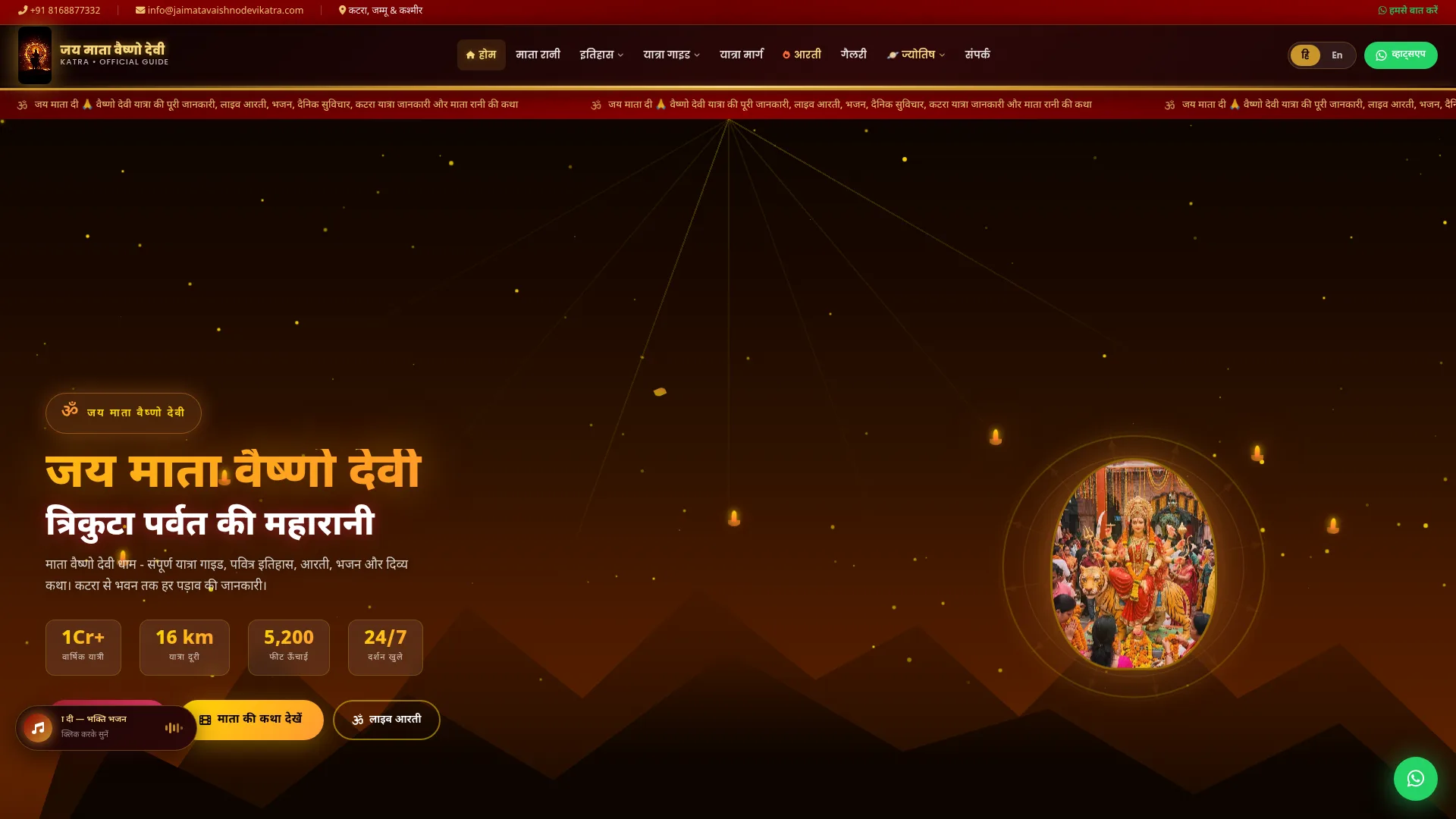
Jai Maa Vaishno Devi Katra
A published devotional website example with pilgrimage-related information.

Looking for a website developer in India? BuntyTech, led by founder and developer Bunty Arora, works remotely with businesses across the country. A useful website should help a visitor understand the offer and complete a real task, whether that is comparing a service, asking for a quote, reading current information or placing an order. Start with that task, choose the simplest suitable format, and agree the pages, features, price and handover in writing before development begins.
A website is not one fixed product. A single-offer business may need a focused landing page, while a company with several services needs navigation that lets a customer compare them. A store has product and checkout tasks. A member portal or CRM has staff roles, records and permissions that need separate planning. Writing down the visitor task first helps keep the page list useful and prevents paying for features that do not support the business goal.
A landing page can present one offer and a clear enquiry action. BuntyTech lists a five-page website package for a small business that needs core information such as Home, About, Services, Work and Contact. A site with an admin panel can support specific content or record updates agreed in the scope. An ecommerce build needs product information, a checkout path and order handling. A custom application needs a requirements list for roles, data, screens and rules before anyone can estimate it reliably.
Many people first meet a business through a phone screen, a forwarded link or a search result. The page should load with a clear heading, explain what the business does, and make its next step easy to find without forcing a visitor through a long form. Useful pages answer practical questions before asking for contact details: what is offered, who it is for, how the process works, what is known about price and which details still need a conversation. Use current business information and images the business has permission to publish.
A written proposal turns a broad request into work both sides can review. It should identify the page list, interactive features, content and image responsibilities, integrations, review stages, price, payment milestones and what is excluded. If the project connects to a third-party tool, name the service and any recurring fee separately. A store needs clear product and order responsibilities; a dashboard needs agreed user roles and records. Ownership, account access, backups and post-launch support should also be written down rather than assumed.
BuntyTech describes its service model as remote project work across India. The verified Google Business Profile is in Bhuna, Haryana; a remote service page is not a claim of a staffed office in each city. Requirements, drafts and review feedback can be exchanged online. At the start, share the business location, decision-makers and the best way to review work. The project plan should state who approves content and features, how feedback is collected and what happens if requirements change after approval.
BuntyTech reports 4 years of experience and 117 completed or live projects. These are business-reported totals; BuntyTech does not publish a project-type breakdown. Its published devotional portfolio includes Jai Maa Vaishno Devi Katra, Jai Shree Khatu Shyam and Ayodhya Ram Mandir pages. The examples are useful for reviewing actual page presentation, but they are not proof of a particular traffic, sales or ranking result. A good brief asks what a visitor must find quickly: visit information on a devotional resource, product details in a shop, or services and contact options for a local business.
BuntyTech publishes a landing-page starting price of ₹1,500, ₹4,999 for a five-page website, ₹9,999 for a website with an admin panel, ₹12,000 to ₹20,000 for ecommerce depending on the business, and ₹12,000 for a complete 3D website. These are the business’s stated reference prices; they do not define every feature or third-party charge. Before approving work, ask for the agreed pages, integrations, content responsibilities, revisions and recurring costs to be listed alongside the quote. Mobile app and SEO pricing are described separately on their service pages.
A clean website can make its public information easier for people and search crawlers to access, but technical setup cannot force a page into Google or an AI answer. Each important URL needs a clear purpose, a self-consistent canonical, an indexable response and links from relevant pages. Content should explain the actual service and use verified business details. A sitemap and an optional llms.txt file help describe or discover URLs; neither guarantees indexing, rankings, traffic, enquiries or citations. BuntyTech’s SEO work is scoped separately from website development.
Before a site is treated as complete, review the agreed pages and important visitor paths together: mobile navigation, contact actions, form confirmations, product or admin tasks and links. BuntyTech says its working approach is to keep reviewing agreed deliverables with the client before considering the project ready for handover. That is a project-review approach, not an automatic lifetime-maintenance promise. The agreement should say what support period is included, who handles hosting or third-party services and how future changes will be requested and priced.
These BuntyTech portfolio pages show real examples of published work. They are included for design and content review, not as claims about traffic, rankings or sales results.
A published devotional website example with pilgrimage-related information.
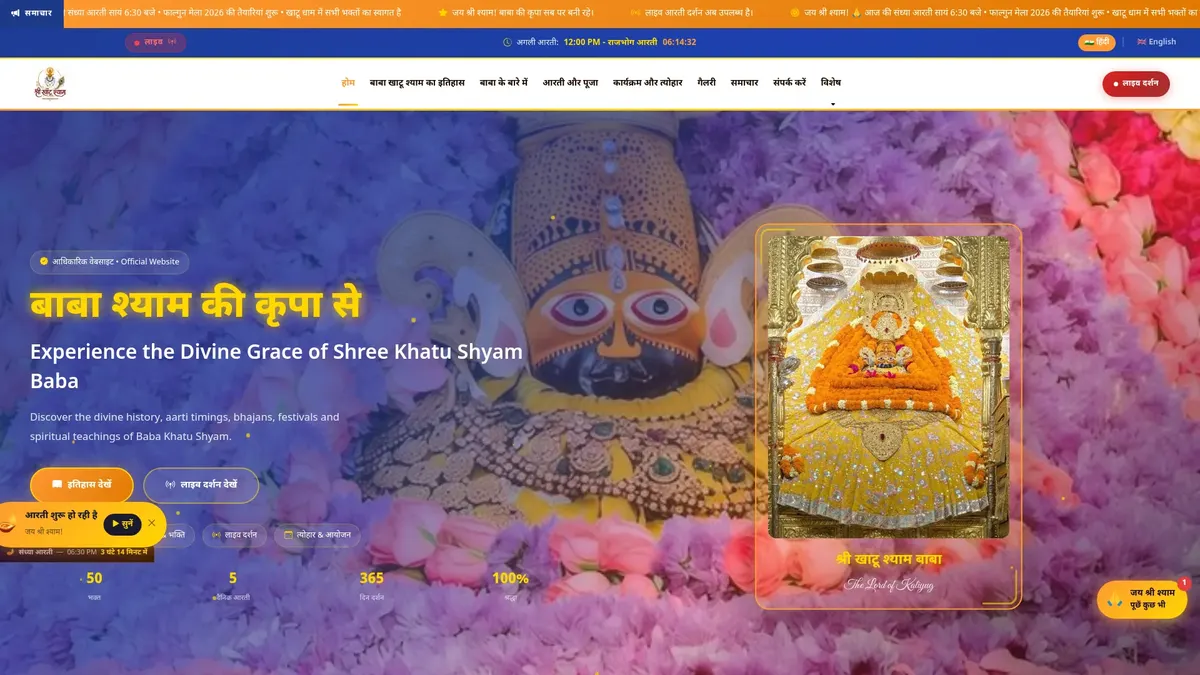
A published project page for a devotional and pilgrimage-related website.

A published portfolio example in the devotional website category.
BuntyTech’s published reference prices are a landing page from ₹1,500, a five-page website at ₹4,999, a website with an admin panel at ₹9,999, ecommerce at ₹12,000–₹20,000 depending on the business, and a complete 3D website at ₹12,000. These figures are supplied by the business and are not a quote for every feature set. Ask for a written scope that distinguishes included work, optional integrations, external fees, payment stages and support after launch.
For Web development in India, ask the written quote to spell out inclusions, exclusions, content ownership, third-party charges, payment milestones and handover. BuntyTech’s standard website prices are in the website cost guide.
Yes. BuntyTech says projects are delivered remotely across India. The verified Google Business Profile is in Bhuna, Haryana; remote service does not mean the business has a staffed office in each city.
Published references include a landing page from ₹1,500, a five-page website at ₹4,999 and a website with an admin panel at ₹9,999. Confirm pages, features, content work and exclusions in a written quote.
BuntyTech publishes an indicative range of ₹12,000–₹20,000 depending on the business. Product data, checkout, payment, shipping and integrations affect the final scope.
Yes. BuntyTech reports work on mobile apps, software and CRM systems. Share the screens, user roles, data, integrations and workflows so the project can be scoped.
There is no single timeline for every project. BuntyTech confirms a schedule after reviewing pages, features, content readiness, integrations and feedback responsibilities.
No. Search engines and AI products decide what to crawl, index, rank or cite. A developer can implement agreed site improvements but cannot guarantee those outcomes.
Lifetime maintenance is not automatically included. Confirm the included support period, hosting responsibilities and price for future changes in the written project agreement.
Send BuntyTech your business goal, audience, current website, required pages, features, budget range and preferred launch window. The next step is to review the requirements and document a suitable scope.
A website is not one fixed product. A single-offer business may need a focused landing page, while a company with several services needs navigation that lets a customer compare them. A store has product and checkout tasks. A member portal or CRM has staff roles, records and permissions that need separate planning. Writing down the visitor task first helps keep the page list useful and prevents paying for features that do not support the business goal.
Share your current website if available, the intended audience, the task visitors should complete, required pages or integrations, and any content or examples you have permission to use. Looking for a website developer in India? BuntyTech, led by founder and developer Bunty Arora, works remotely with businesses across the country. A useful website should help a visitor understand the offer and complete a real task, whether that is comparing a service, asking for a quote, reading current information or placing an order. Start with that task, choose the simplest suitable format, and agree the pages, features, price and handover in writing before development begins.
Share the project type, budget range and preferred timeline. We can review the scope and clarify deliverables before you decide whether to proceed.